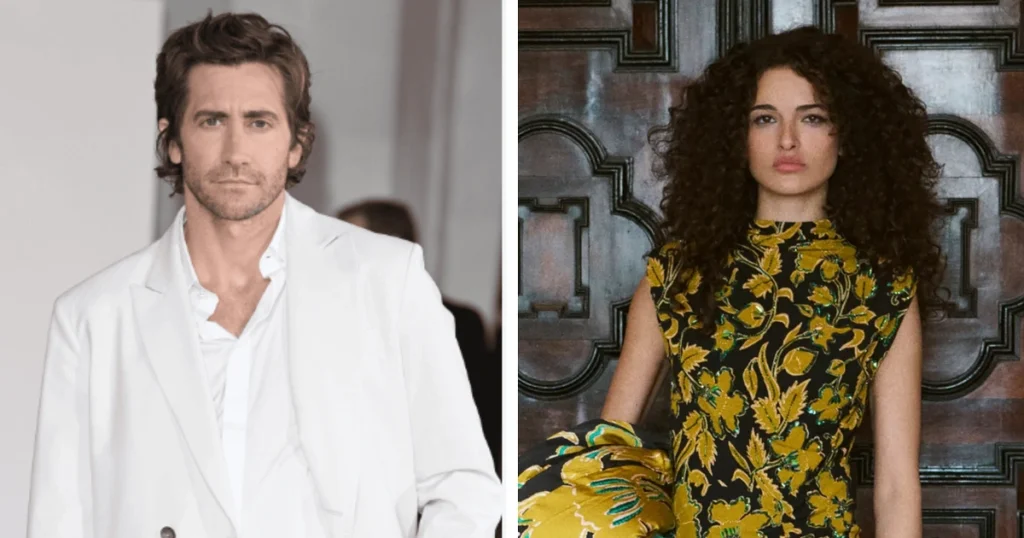

If you searched these two names diane von furstenberg and jake gyllenhaal together, you probably saw them side by side somewhere and assumed there was a story behind it. Fair enough. One is a fashion designer the whole world knows for a single dress, the other a Hollywood actor known for roles in Brokeback Mountain and Nightcrawler. So it is natural to wonder if they are family, exes, or business partners. The honest answer, up front: no confirmed family tie, no confirmed romance, and no business deal between them. What is real is that they move in the same New York and Hollywood circles, and their names keep showing up at the same events. This piece breaks down who each of them is, why people pair them, and what is actually on the record.
Part One: The Two Names
Who is Diane von Furstenberg?
Diane von Furstenberg was born in 1946 in Brussels and grew up moving between Europe and New York. She married Prince Egon von Furstenberg in 1965, and after they divorced in 1992 she kept the name as her professional identity, which is why the world knows her as DVF. The big turning point came in 1974, when she launched the wrap dress. It was one simple, flattering design, and it sold out almost as fast as it appeared. That single garment built an entire brand, and she ran the label for decades after that. She also became president of the CFDA, the main fashion industry body in the US, and married media executive Barry Diller in 2001. She has two children from her first marriage.
Who is Jake Gyllenhaal?
Jake Gyllenhaal was born in Los Angeles in 1980 and started acting as a teenager. October Sky put him on the map, Donnie Darko made him a cult favorite, and Brokeback Mountain in 2005 turned him into a household name. He has kept picking hard, different roles ever since, from Zodiac to Nightcrawler, which earned him an Oscar nomination. He has done Spider-Man, Broadway, and HBO’s Under the Banner of Heaven. Off camera, he keeps his private life mostly out of the press. His sister Maggie is the person people usually connect to the other family, and that one is a real, documented link: she is an actress and director in her own right, and the two families share the same social scene.
Why do people search for them together?
Because both families live in the same small world. New York parties, fashion weeks, film premieres, charity galas. When two famous names keep showing up at the same table, people assume there is a deeper tie. There is also the contrast that grabs attention: she was born in 1946, he in 1980, about a generation apart, in different industries. That gap is exactly what makes people click and dig, even when the digging turns up nothing solid.
Part Two: What the Record Actually Says
Shared events that are documented
A few real connections do exist, and they are all public:
– In 2006 Diane became president of the CFDA, the main fashion industry body in the US.
– In 2009 Jake appeared at the CFDA Fashion Awards, and both attended the Vanity Fair Oscar party that year.
– In 2015 Maggie Gyllenhaal presented at the DVF Awards, Diane’s charity event for women in fashion.
– In 2019 both attended the launch of YouTube’s /Fashion channel.
– In 2024, separate projects involving each premiered at the Tribeca Festival.
None of that is a relationship. It is just what happens when two families keep booking the same rooms.
Quick details, side by side
|Diane von Furstenberg | Jake Gyllenhaal
| Born | 1946, Brussels, Belgium | December 19, 1980, Los Angeles |
| Known for | The wrap dress and the DVF brand | Brokeback Mountain, Nightcrawler, Spider-Man |
| Field | Fashion and business | Film, stage, and production |
| Family | Two children; married to Barry Diller since 2001 | Sister Maggie Gyllenhaal; daughter Otti (2023); married to Jeanne Cadieu (2022) |
| Documented link | Shared events, awards, and industry circles | Same |
What has no evidence
Three claims keep floating around online, and none of them hold up. First, that they are related by blood or marriage, but there is no documented family tie between the two families. Second, that they dated, but Jake’s dating history that is actually on record, including Taylor Swift and Jeanne Cadieu, does not include Diane, and neither has ever confirmed anything. Third, that they have a business partnership, but there is no joint company or project under either name. If a site tells you otherwise without citing real reporting, treat it as a guess.
The bottom line
The two names diane von furstenberg and jake gyllenhaal keep meeting in the same rooms for a good reason. Both sit right at the overlap of New York’s fashion and film worlds, and both families attend the same events and support the same causes. But sharing rooms is not the same as sharing a story. Until either says otherwise on the record, the honest answer stays the same: two separate, successful careers, one overlapping social circle, and a lot of search engines guessing at the rest.